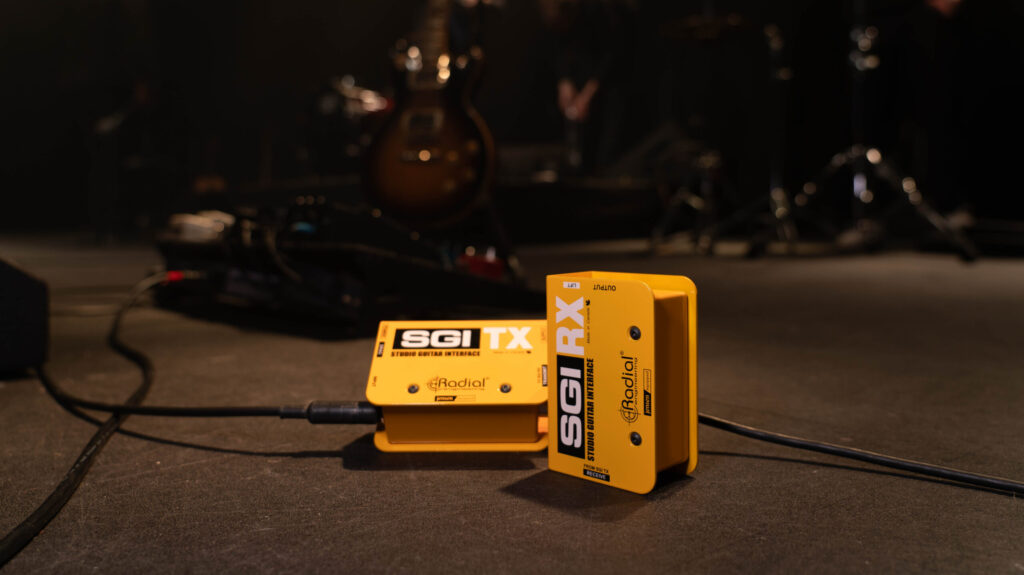
Built specifically to preserve tone and signal integrity over lengthy, unbalanced cable runs, Radial’s SGI (Studio Guitar Interface) Line Isolator was initially created with recording in mind.
If you’ve ever been alone in a live room while your engineer, producer, other band members, and maybe a few hangers-on listen and critique your work from afar, you’ve likely endured long silences between one take and the next; silences that may play havoc with your confidence and comfort level.
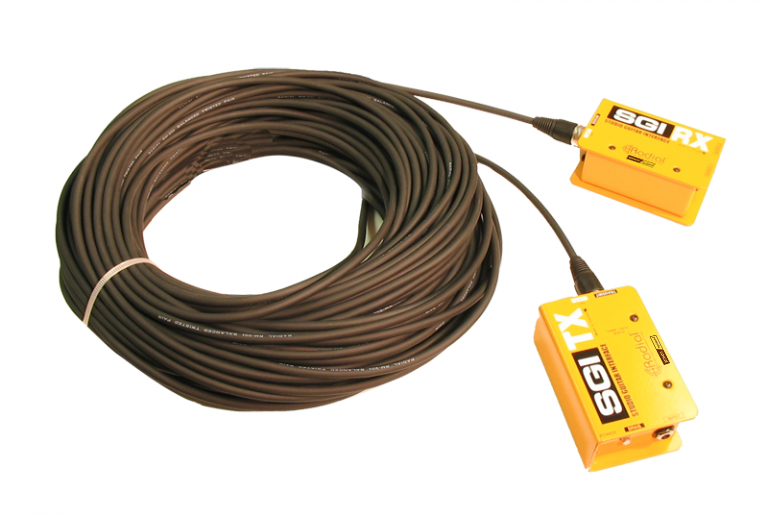
Enter the SGI. A high-performance line driver system for guitars and basses, the SGI utilizes active buffering and transformer isolation to allow you to drive an unbalanced instrument signal up to 100 meters (300ft) – noise-free. Allowing players to record from the spot that’s most convenient and, more importantly, most comfortable for them to capture the ideal performance.
Of course, preserving your guitar tone on stage is equally critical, and, in both settings, separating a player from their amp is often necessary.
What is the SGI?
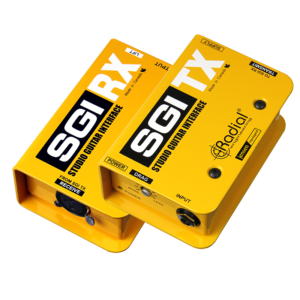
The SGI consists of two boxes: the SGI-TX transmitter and SGI-RX receiver, which are connected via a standard, balanced XLR cable, making routing flexible, reliable, and easy. Simply plug your guitar into the SGI-TX’s input, connect your amp from the SGI-RX output, and crank it up to your heart’s content.
Using a discrete buffered circuit, the SGI TX drives signals over lengthy cable runs, with the SGI RX capturing and converting that signal to the appropriate impedance to feed your amplifier while retaining your original intended tone.
Evolution – From Studio to Stage
Unsurprisingly, artists and engineers quickly realized the SGI’s potential as a live tool, specifically in situations where players (as in the studio) are separated from their amps: on large stages, when using IEMs, remote pedalboards and wireless systems, or simply because of the desire/need for a ‘clean’ stage.
As the use of the SGI has broadened, Radial has tweaked the unit to offer more value in both settings.
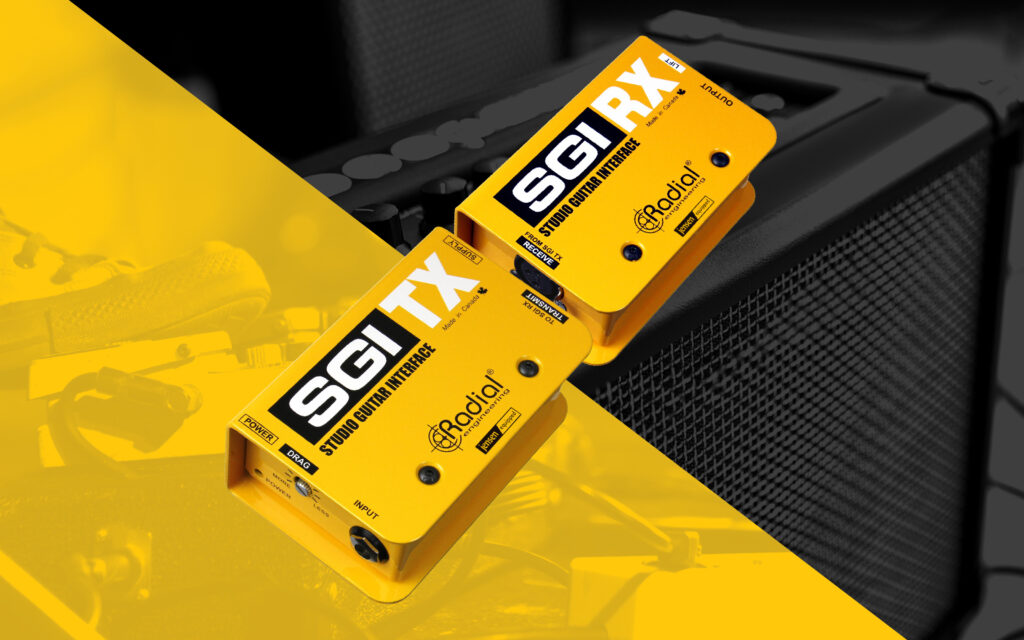
A) While the SGI ships with a 15V power supply to power the SGI-TX unit, the latest version can also be powered by a standard 9-15V pedalboard power supply, making it easier to integrate with pedalboards. The SGI-RX is passive and doesn’t require power to operate.
B) By equipping the latest iteration of the TX and RX units with premium Jensen transformers, to better prevent hum/buzz from ground loops, ensure wider, flatter frequency response, lower noise and distortion, and improve dynamic range for optimal signal-to-noise ratio.
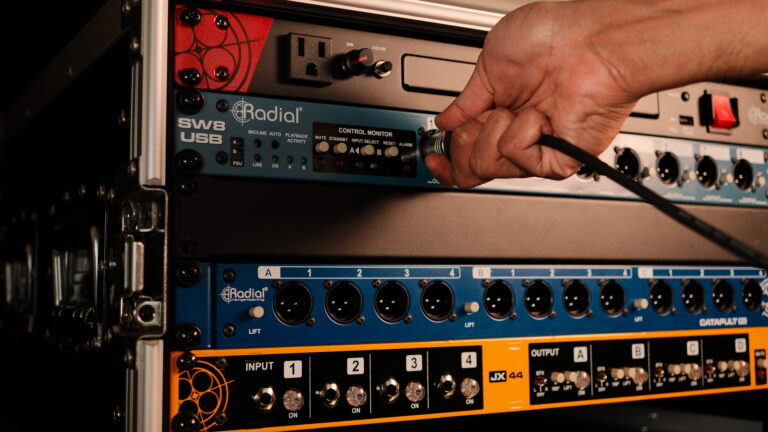
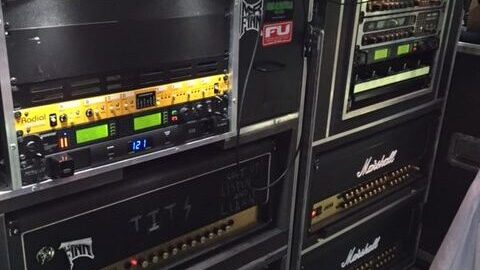
The addition of Jensen Transformers also makes utilizing the SGI with Radial’s JX44 Guitar Signal Manager (which allows users to select between up to four guitars and six amplifiers and features a built-in DI, SGI line driver, and X-Amp Reamp®) more fluent and less infrastructure-intensive.
The Studio Problem: How Distance Kills Tone
Signals from guitar pickups are high impedance and relatively weak, which can result in a loss of tone and degradation as the signal travels over long distances or through multiple devices; similar to how dialling your guitar’s tone knob back robs signals of top-end detail.
Long, unbalanced cable runs create impedance mismatch and high capacitance, causing high-frequency roll-off and tone degradation. As cable length increases, capacitance loads down pickups, dulling brightness and clarity. And, because standard cables aren’t designed for extended distances, it’s difficult to maintain a pristine guitar tone without signal loss or noise.
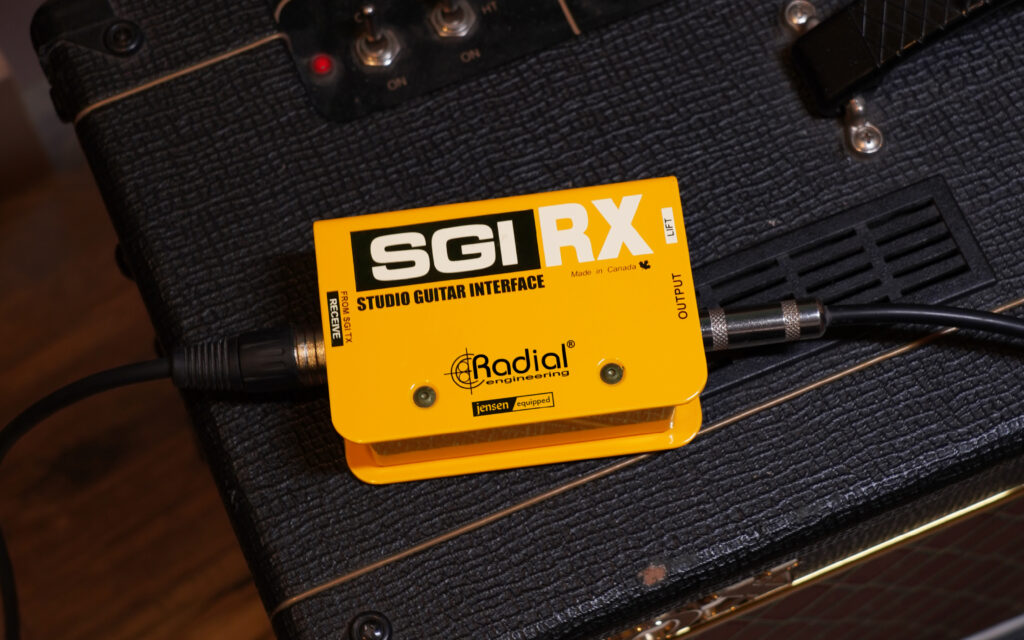
In studios, a guitarist is usually in a separate space from their amp, which makes long cable runs a necessity – but at the risk of altering tone and introducing noise. The Radial SGI mitigates those issues by converting guitar signals to a balanced low-impedance line, eliminating capacitance-related high-end roll-off and preserving tone.
By using the SGI, you’re also ensuring more efficient workflow: allowing you to isolate the ‘loud’ in the live room and/or iso-booth, while your guitarist plays, wherever they feel comfortable – with their amp placed wherever is most ideal, making the process of capturing the original performance, or the Reamp® process, far easier and quicker.
The Live Sound Use Case: Clean Signal on Big Stages
Similarly, long cable runs and/or wireless systems are often required on stage, leading to the same issues. But the stage also introduces additional problems, such as noise from lighting systems and other sources.
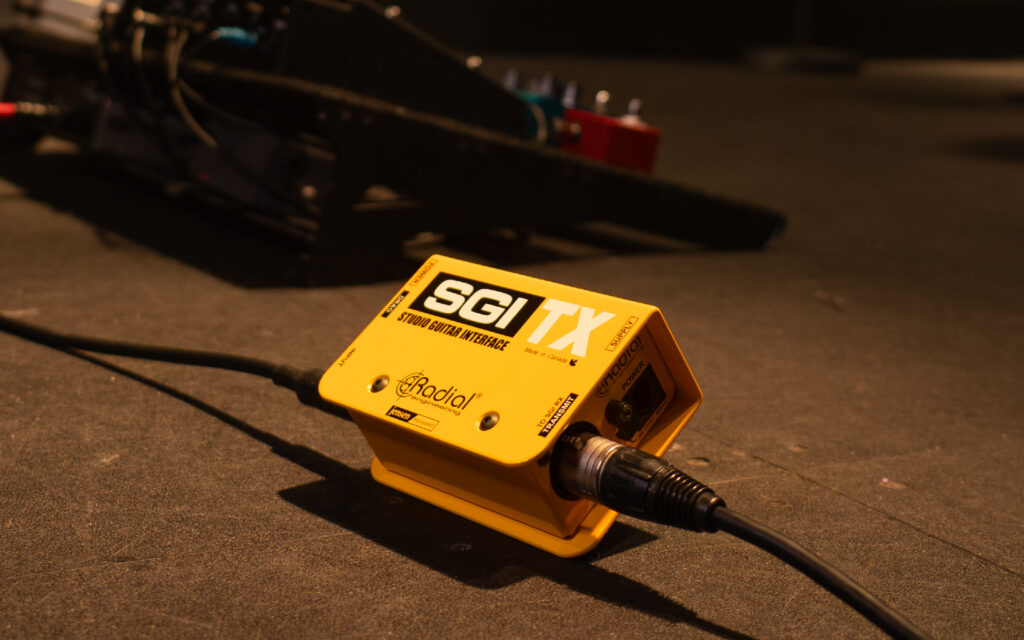
Again, the SGI converts a wireless receiver’s output to balanced line, sending it cleanly to amps offstage or under the stage, while preventing tone loss, noise, and interference, and maintaining a consistent and accurate reproduction of your signature sound.
Tips for Integration
Integrating the SGI into a studio patchbay/pedalboard setup: Connect the SGI-TX between the guitar/pedalboard output and patchbay input, routing the balanced signal through existing mic lines to the iso booth. Place the SGI-RX near the amp input. For pedalboards, mount the SGI-TX at the output stage to drive long runs cleanly to amps offstage or in isolation rooms.
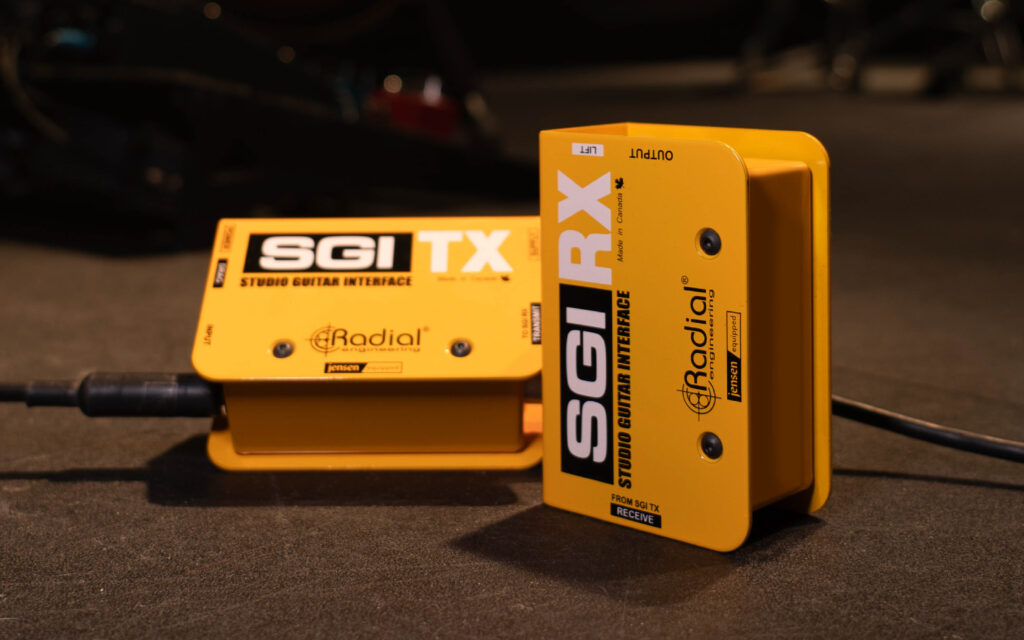
Best practices for long cable runs: Always use high-quality balanced XLR cables between the SGI-TX and -RX to maintain signal integrity over long distances. Avoid coiling excess cables tightly, which can induce noise. Ensure the SGI-TX is properly powered, and secure connections to prevent accidental disconnections during sessions or shows.
Pairing SGI-TX and SGI-RX units effectively: Always use SGI-TX and SGI-RX together as designed and position the RX as close to the amp input as possible.
Bear in mind that when deploying the SGI, short cables are your friends. Plugging in a 20-foot cable for no reason between your guitar and/or amp and the SGI TX or RX is counterproductive. And there’s no need: owing to the design and construction of the SGI, and their transformer isolation, placing either the TX or RX near your amp (even right on top of it) won’t impact your signal or sound.
The SGI’s Drag control allows you to apply load correction and dial in the proper load for your pickups when connecting directly to the SGI TX. If you’re connecting via a pedalboard, however, the impedance relationship is already set, so using the Drag control is unnecessary.
Why SGI?
Fair question.
Unlike many line drivers, the SGI was created specifically for guitar-level signals, to preserve pickup dynamics and frequency response and deliver your authentic full tone without sonic colouration.
Further, the SGI not only features a custom, active buffer circuit to maintain your tone, enhance signal drive, and eliminate impedance-related loss over long runs, with transformer isolation via Jensen Transformers (arguably the most relentlessly fine-tuned and highly sought-after transformer on the market) – even in the most challenging environments, the SGI delivers.
And, like all Radial products, the SGI is built to survive the rigors of the road owing to it’s heavy-duty steel chassis, locking connections, and passive design to ensure (from one show to the next, and regardless of the horrors potentially inflicted on your gear as it travels – by road or, worse, when subject to the whims of the airport luggage meat-grinder), reliable operation when it arrives on stage.
Finally, while some players may be tempted to ‘hack’ the system by utilizing a pair of passive DIs in reverse instead of a dedicated line isolator, a DI’s transformers aren’t designed for proper impedance bridging or flat frequency response when used ‘backwards.’
By contrast, the Radial SGI TX/RX system is purpose-built to optimize guitar signal integrity over long distances, actively buffering and converting unbalanced instrument signals to balanced line-level signals. It’s expecting those signals and therefore handles them well.
For more information and examples to help you leverage the Radial SGI system to its fullest, visit www.RadialEng.com today.