Key Takeaways
- Adding gear adds creative options & complexity
- Proper routing ensures reliability, redundancy, & repeatability.
- True-Bypass switchers eliminate noise, simplify workflow, and preserve tone
- Passive & Active Switchers are useful for different use cases
- Simplicity is a design choice
Live Rigs Get Complicated (Even When You Don’t Mean Them To)
Whether it’s because your gig has changed (or changes constantly), your rig evolves: new pedals, a second amp, an interface, an amp sim; the possibilities are endless.
Each addition adds functionality and expands your options on stage, but can create unintended complications. When adding those options, it’s important to consider the most effective way to route signals to ensure pristine sound reproduction and a fluid on-stage or in-studio workflow.
Routing isn’t just about getting signals from point A to point B. It’s about what happens to them along the way and how you route them in real-time, during performance.
Adding a tool that helps you streamline and manage routing helps reduce complexity substantially.
Ensuring Reliability & Redundancy, Without Complexity
Feature creep isn’t something that just applies to a device or software platform. Taken as a whole, your system, from the instrument out, offers you plenty of opportunities to add elements, resulting in feature creep on a system level.
Every extra feature or device adds potential points of failure; additional cabling and power supplies, the potential for noise, interference, and the alteration of your signature sound.
It also means you have more to deal with and think about on stage. Developing ‘muscle memory’ isn’t just helpful in playing your instrument but also in making all the changes to your settings, patches, and so forth during performances.
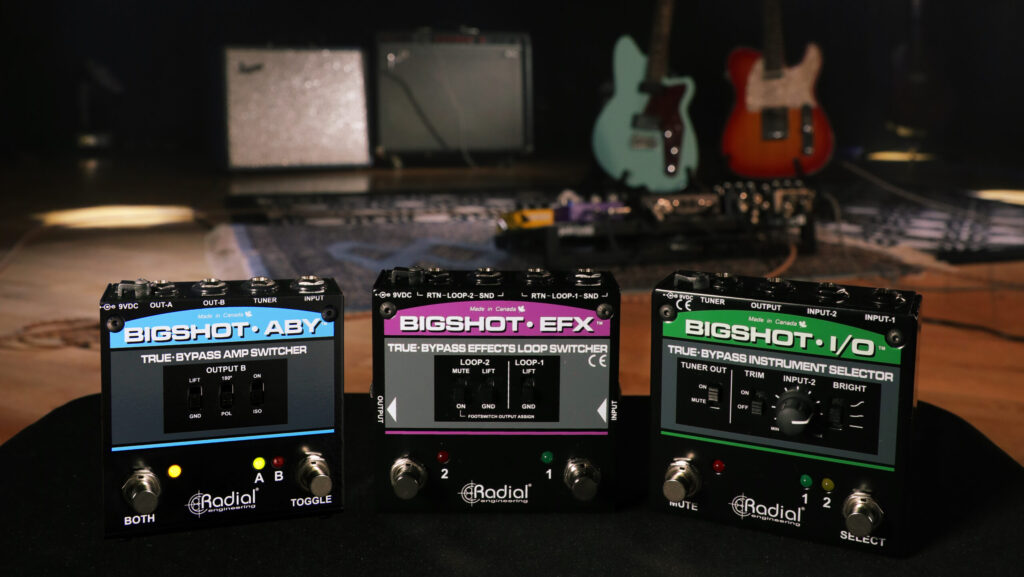
How to manage that? Let’s take a look at some common routing scenarios and how Radial’s BigShot line of passive True-Bypass switchers can help streamline routing and workflow.
Routing Problem #1: Switching Between Amps
The most typical scenario here is a setup where you’re sending one source to two amps and need to switch between and/or blend the sound of those amps. Even if both amps are connected to the same power source and you’ve done everything possible to eliminate noise, you may still end up with hum and buzz in one or both amps and/or unwanted alterations to the true tone of your instrument.
Obviously, physically adjusting the level of your amps mid-performance isn’t ideal. You could jury-rig a solution using a Y-cable, but it’s better to address all the issues via a single solution.
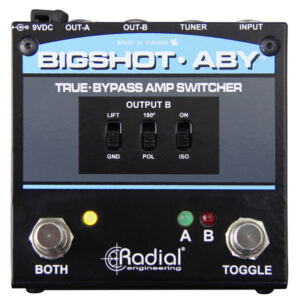
Solution: BigShot ABY
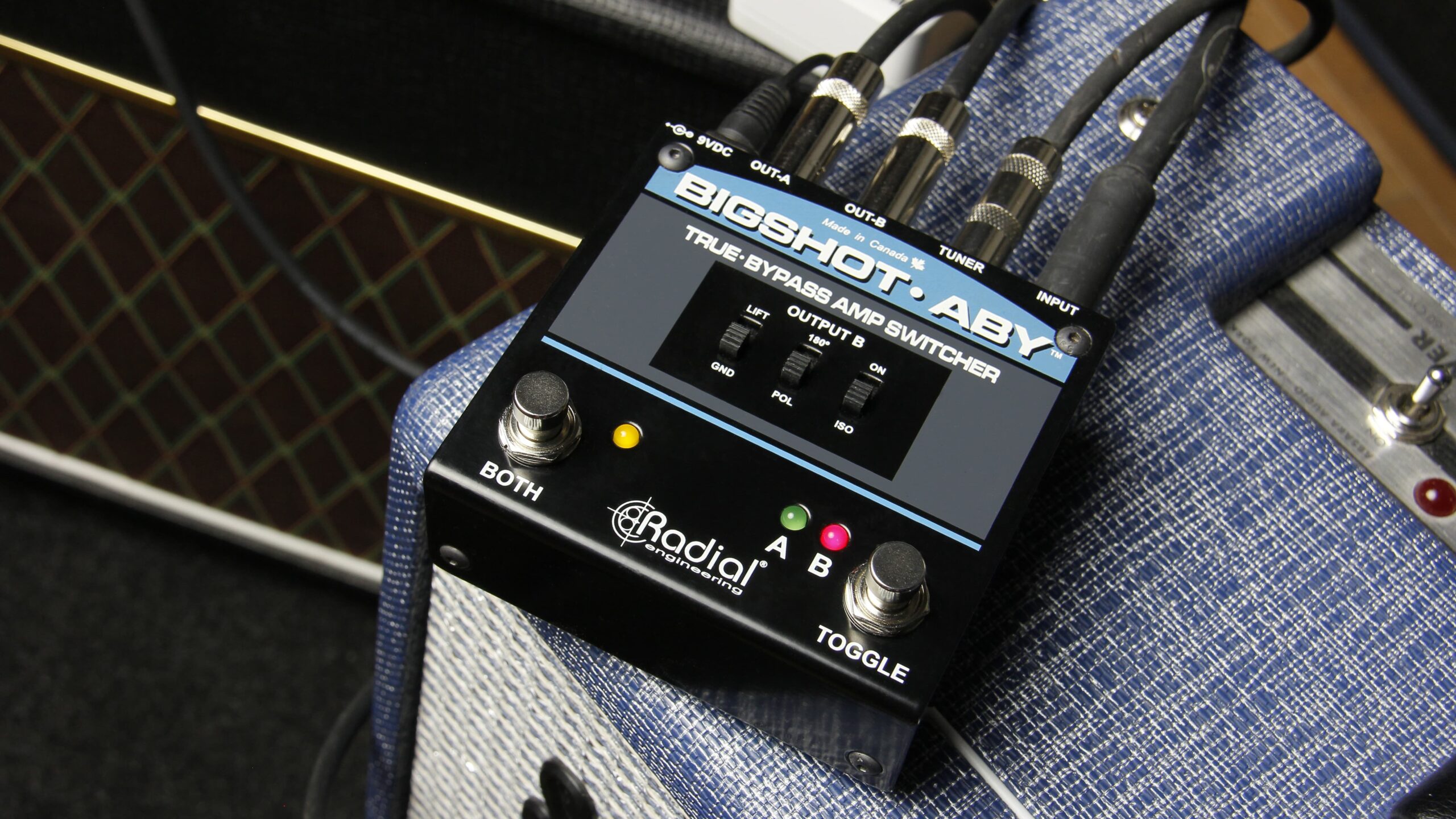
The BigShot ABY is a true-bypass ABY switcher featuring two latching footswitches for switching between or running two amps simultaneously. Its second output offers a ground lift and isolation transformer that, when engaged, eliminates ground loop noise. Additionally, a 180° polarity reverse switch corrects phase and frequency cancellation issues. So you can be confident your true tone will come across unaltered. It also has a dedicated tuner out and can be used for multiple applications, such as muting your amp or switching between channels on vintage amps that don’t support remote switching.
Take a deep dive into ABY switching here.
Routing Problem #2: Switching Between Instruments
Using one amp and need to switch between two instruments?
The blunt force approach is adding an amp or physically unplugging one instrument and plugging in another. That works, but it increases the potential for failure and noise, and adds to your channel count (which can be problematic when console real estate at Monitors or FOH is an issue).
It also means you have to mute or turn your amp’s volume up and down to avoid pops and clicks, and adjust your instrument level each time you transition between one instrument and the next.
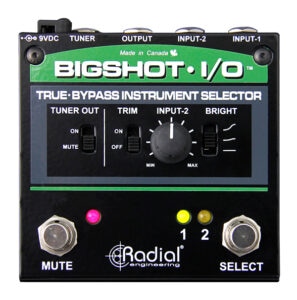
Solution: BigShot i/o
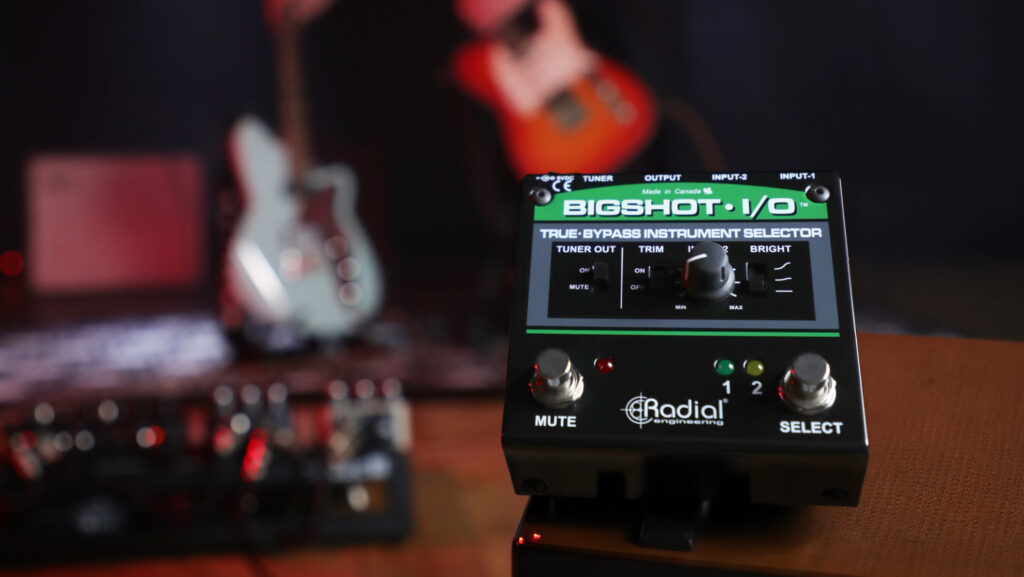
Enter the BigShot i/o True-Bypass Instrument switcher, which does the reverse of the BigShot ABY. Allowing you to switch between two inputs rather than outputs, seamlessly and noise-free. It also provides trim, brightness, and level controls on input 2. So you can dial in your tone to taste and match levels once instead of repeatedly
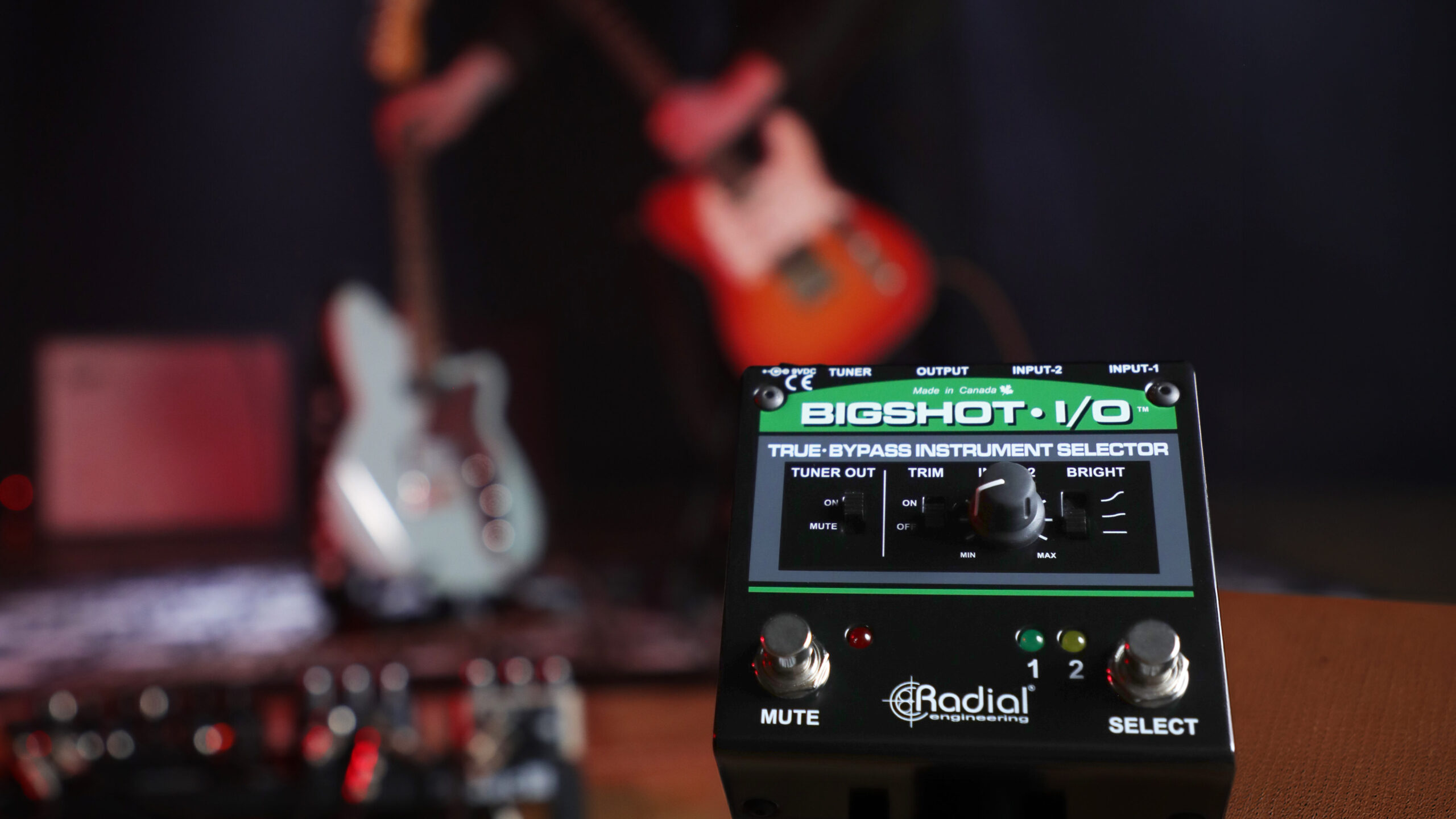
Like the ABY, it features a dedicated tuner output and mute switch. Whether switching between a pair of electric guitars, acoustic and electric, an active and passive bass, all the control you need to transition from one axe to another is available via a simple, one-box, set-it-and-forget-it solution.
Need more? Check out our entire range of instrument splitters here.
Routing Problem #3: Switching Between Two FX Pedal Chains
Nobody wants to look like they’re tap dancing when making changes on their pedalboard while the band and crowd wait for them to sort themselves out. It’s not a good look from the stage or audience perspective and ups the chance of human error, noise, and, frankly, distracting yourself from the job at hand.
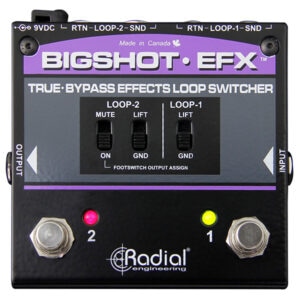
Solution: BigShot EFX
The BigShot EFX provides fixed infrastructure for your FX rig, allowing you to set up two separate effects loops and insert them into your pedal chain as and when needed.
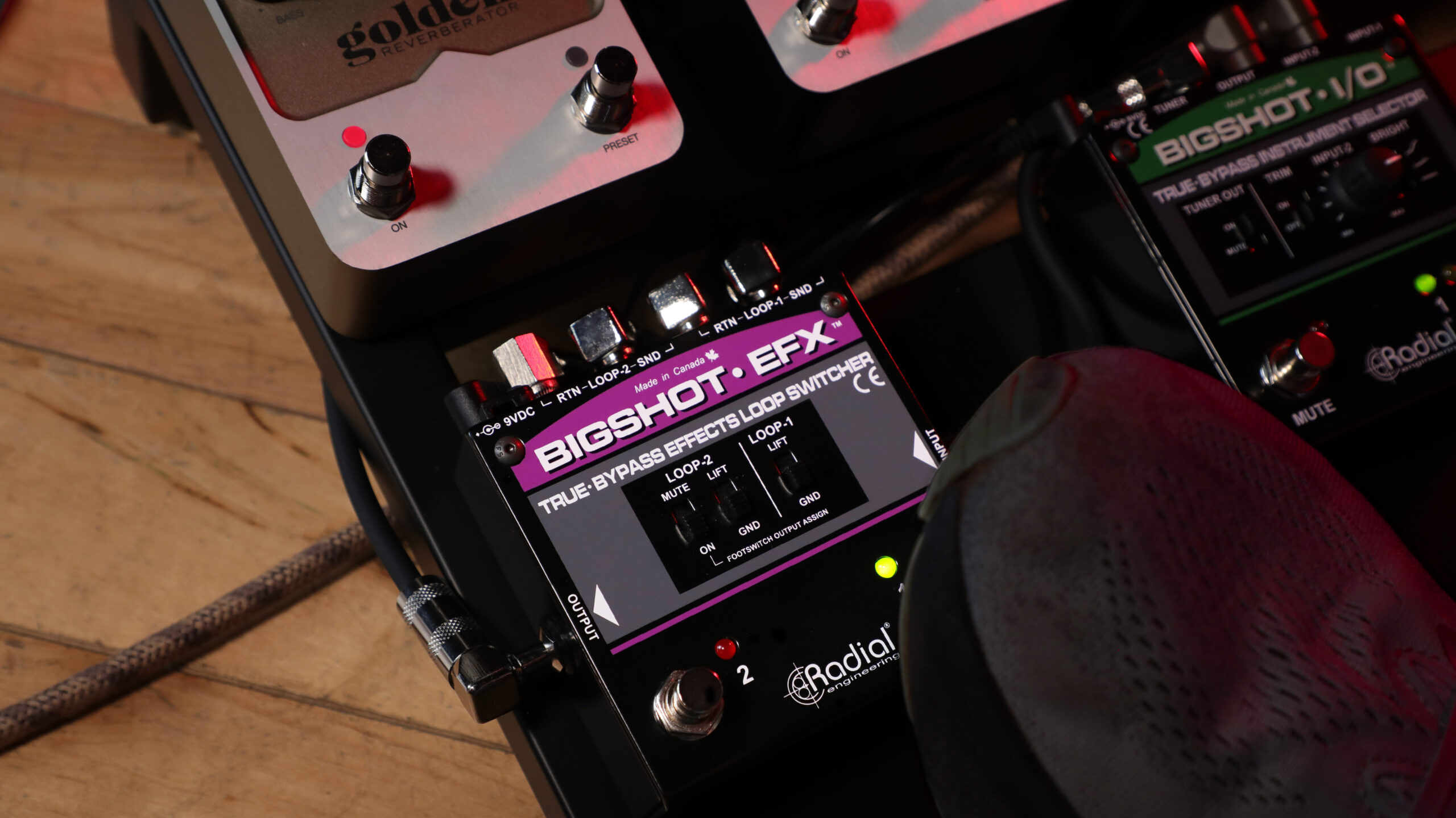
It simplifies your setup. Letting you use multiple pedals in different combinations and switch between them with a single stomp, seamlessly and silently. Grouping, for example, distortion and similar pedals on one chain, and time-based FX on another, and then switching or blending them easily; no tap shoes required.
That means less likelihood of hitting the wrong pedal or sequence of pedals and, with vintage pedals that are more likely to cause noise inherently, the ability to engage them only when needed – putting them in True-Bypass mode for a straight wire connection, eliminating the need to put up with a 60-cycle hum for the entire show, or to add a buffer that may alter your sound.
Why Passive Switching Works So Well Live
In brief, one less failure point. Although our BigShot boxes can be used with a power supply, it’s only required to light the LEDs on the pedals, not to operate the device. Lose power, and you don’t lose functionality as you would with an active device, whether it’s hard-wired or battery-powered.
- Simple passive routing ensures the original character of the instrument reaches the console without unwanted coloration.
- Passive, transformer-isolated switchers help eliminate ground loops that introduce noise on stage.
- Fixed, predictable routing from rehearsal to the stage – Passive switchers pass your sound along as intended, which means no surprises for your engineer or audience.
- No Power, No Problem – i.e., no batteries or wall warts, nothing to run out of juice or get kicked out of a device accidentally.
When Active Switching Makes Sense
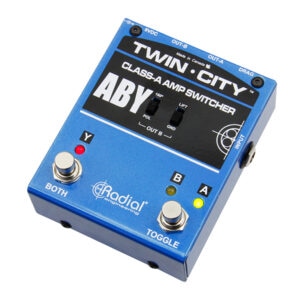
Active switchers can be beneficial depending on your use case. That’s where our Twin-City Active ABY Amp Switcher comes into play. It provides the same functionality as the BigShot ABY, but includes a buffer circuit to eliminate high-end loss and signal degradation over longer cable runs, and also prevents loading down your pickup in cases where you have an instrument with passive pickups plugged directly into your amps.
Conclusion: Simplicity Is a Sound Decision
For true tone in any situation where multiple amps, instruments, and/or FX chains are in play, True-Bypass switchers are highly useful tools. Giving you the confidence that your signal will behave exactly the same way every show. Reducing the kind of complexity that impacts your sound and your ability to perform without thinking about that change you’ve got to make, which order to hit what in, and how to pull it off as quickly and stealthily as possible.