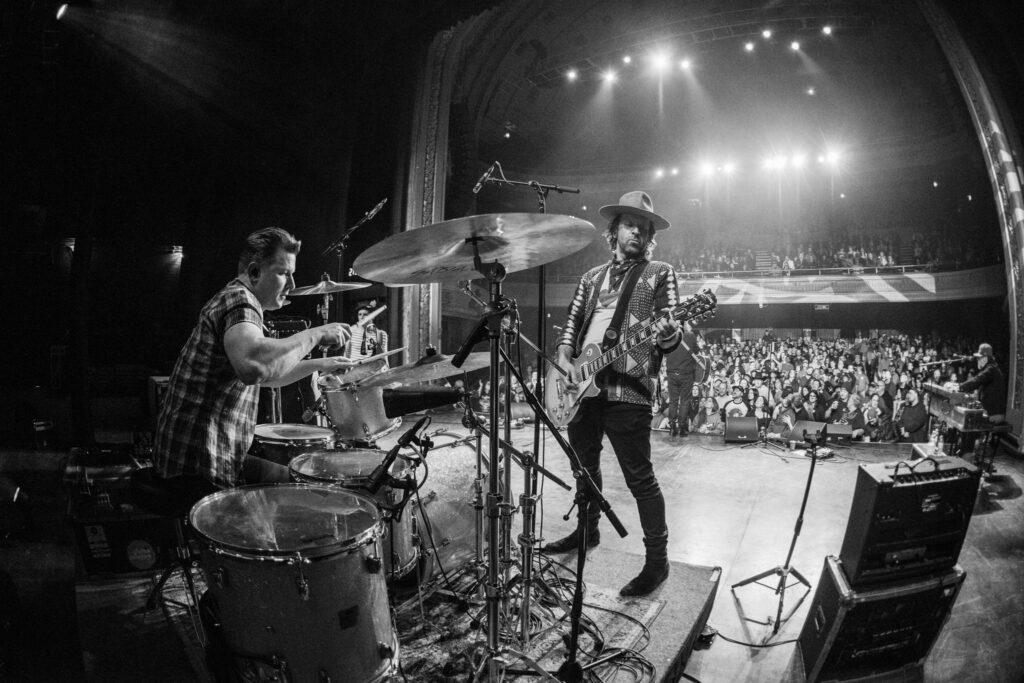
Over 30+ years of touring, The Trews have utilized a variety of Radial gear. Their latest upgrade: adding an SGI Stereo Instrument Line Driver and a pair of ProRMP Reamp® boxes for guitarist John-Angus MacDonald’s dual-amp rig; part of a process spearheaded by FOH engineer, Josh MacIntosh, aimed at streamlining and stage-proofing the band’s rigs.
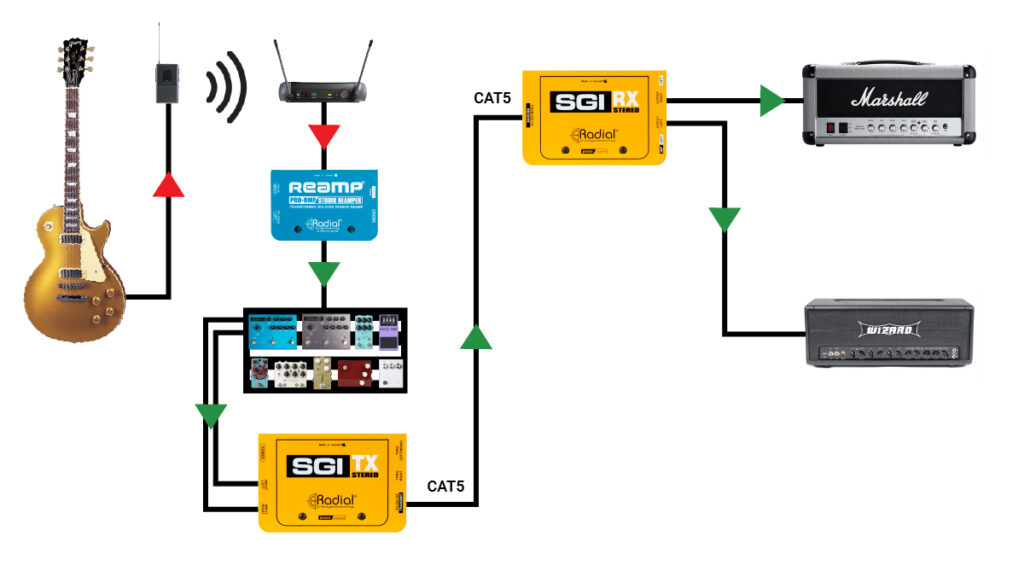
For MacIntosh, replacing 60′ of unbalanced ¼” cable via an SGI Stereo TX and RX unit connected over Cat5 lowered the noise floor of MacDonald’s dual-amp setup appreciably. “We’ve now got more stable connections, and with the isolated outputs, we’re not getting any cross-talk between heads. It’s been a huge improvement for John-Angus’ entire rig. The signal is more robust because it’s balanced vs. unbalanced, and we don’t get any RFI, like we used to.”
As MacDonald mentioned in our recent Inside the Rig Blog, How Pros Run Stereo Guitar Rigs Across the Stage, “Even if noise is subtle, it’s a problem.” He adds that dependability, durability, and good sound are his primary concerns when it comes to deploying new gear: “and probably in that order. Ideally, you’d put good sound first, but when you’re doing 100+ shows a year, durability and dependability are key, because on live shows, even little things can send everything sideways.”
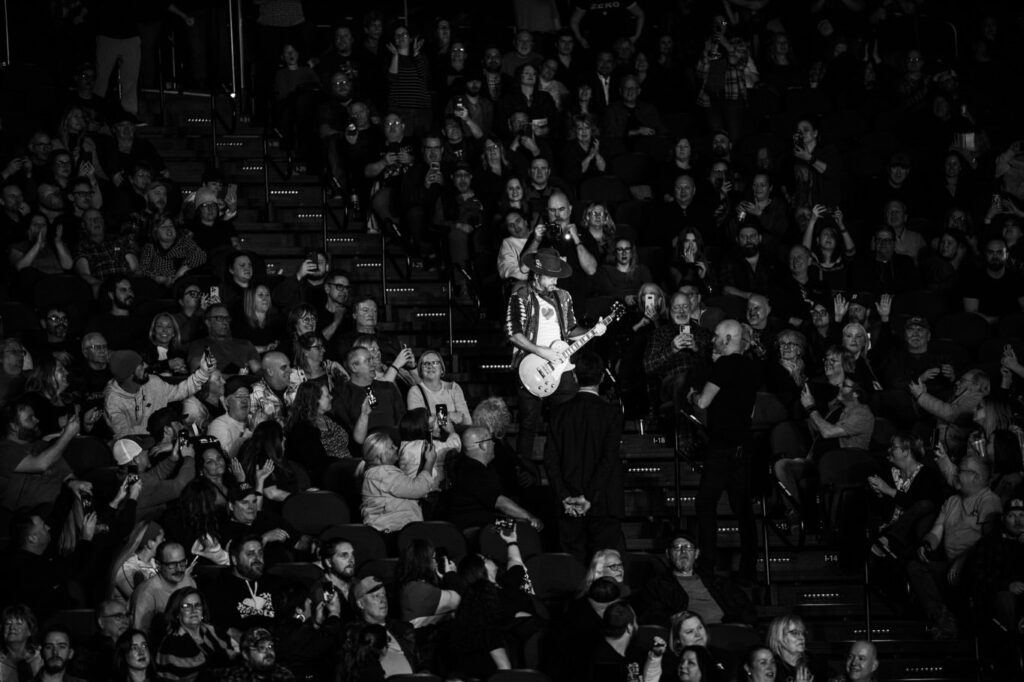
Being prepared for any eventuality is mission-critical. In doing so, uniformity, reliability, and repeatability are key. “In terms of cabling, John-Angus’ rig wasn’t uniform, and his tone wasn’t where he wanted and needed it to be, so we’ve been slowly changing how his rig sounded and responded,” MacIntosh explains.
“We’ve had Radial DIs on the road for years, so I was very familiar with Radial,” MacDonald puts in, including JDIs, ProDIs, as well as J48 and J48 Stereo DIs. “And, Josh, when it comes to anything that’s new and improved, he’s the first to know, so he hips me to it.”
“That’s how the SGI Stereo ended up in the mix,” MacIntosh notes, adding that the addition of Jensen Transformers to the SGI Stereo’s TX and RX units, the price point, and Radial’s build quality were all factors in choosing the unit. “I knew it was going to do what I wanted, and, besides, how can you not support something that’s made by a Canadian company?”
As for the ProRMPs: “Previously, we were going out of John-Angus’ wireless and into his amp sim pedal using an XLR to ¼” adapter. When I’d check the rig without the wireless, it sounded great. Then I’d switch to wireless, and it didn’t,” MacIntosh explains. “Now, we’re going out of the wireless’ XLRs (stereo) to the ProRMPs, which fixes the impedance mismatch so the wireless hits the pedalboard correctly. Then we go out of the pedalboard into the SGI Stereo. The stereo outputs of the final pedal in John-Angus’ pedal chain go to the SGI Stereo TX/RX boxes, which send Channel 1 to a Wizard head and Channel 2 to a Marshall Jubilee.”
Summing up the impact on his sound that the revamped rig and the SGI Stereo have had overall, MacDonald says: “It’s cleaned things up in a big way. I’ve never had less noise. It’s not like noise has ever been a crazy problem. But when you’re taking your rig from venue to venue, sometimes noise is an issue. On this last run, my pedalboard was the quietest it’s ever been. But we’re still getting the full breadth of tone out of the amp. There’s no diminishment from going through the pedalboard. And I give credit to the SGI Stereo and also to Josh for teching it out and making sure the signal path was good and clean. It’s been an improvement, no doubt.”
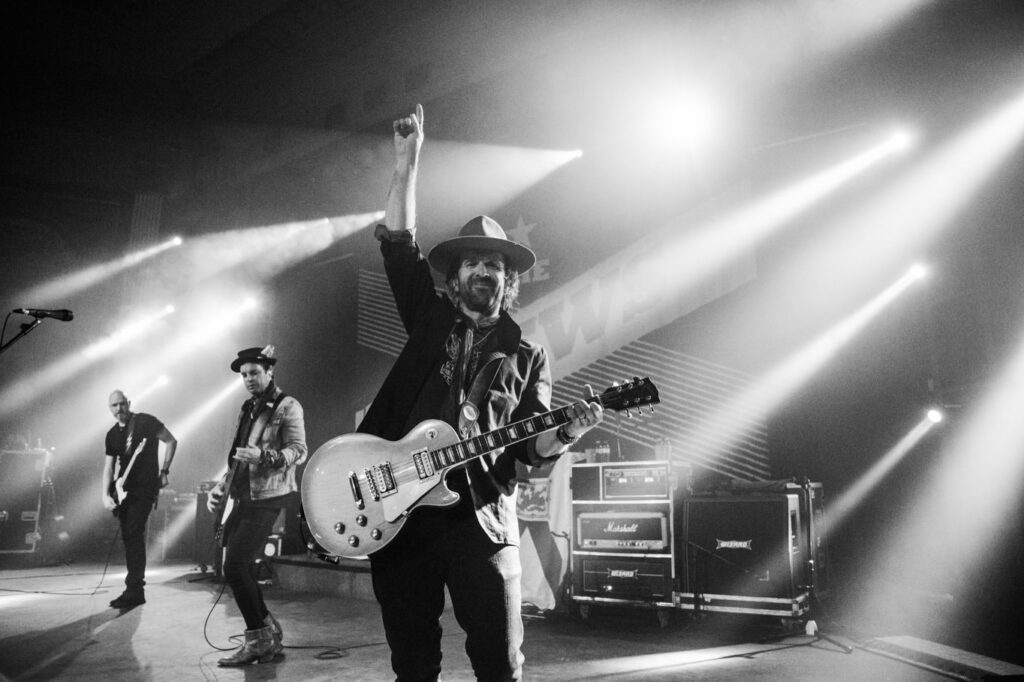
For MacDonald, adding gear to his rig isn’t just about reliability and better sound; it’s also part of a constant quest to remain inspired. “When things have been the same way for too long, I feel like I have to shake things up a bit. You try different solutions every time you gear up to go out (on tour) again, and I think we’ve cleared the deck a bit on that western run and went back to staying out of the way of the source’s sound and just colouring it in a nice way.”
“That’s the key,” he concludes, “good sound at the source.”
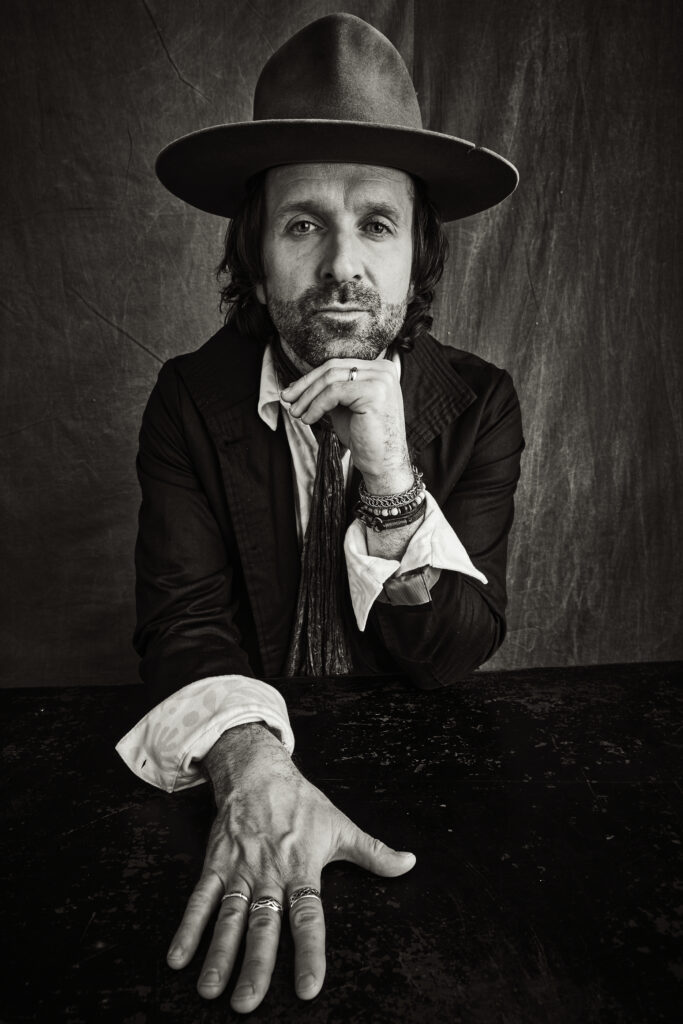
John-Angus MacDonald
What does True To Your Music mean to you?
JA: “For me, it means playing from a place of inspiration; not doing things by rote. On this last tour, we did 7 or 8 songs a night from our 2025 record, The Bloody Light. It’s important to us that we’re playing songs we’ve recently worked on, challenging ourselves, and being in a creative space when we’re writing and playing live.”
Is there any other Radial gear you’ve used that has been particularly useful?
JA: “The JD7 Guitar Distro & Splitter. I used one when we worked on our fifth record (their 2014 self-titled album, The Trews). We’d just set up all the amps we wanted to use and sample them as we go. There are seven channels. You route an amp into each one, plug your guitar into the JD7, and, literally, at the push of the button, there’s your Marshall, there’s your Wizard, your Fender, or whatever else you have in line. And you can also combine them. That’s an incredibly useful tool.”
What advice would you give to someone just starting out when it comes to getting the sound they want and putting the right gear together for live performance?
JA: “I’d say take the most direct path. I always say that the things with the most elements in them are the things that break down the most. When you’re starting out, there are a million things running through your head, and if something goes wrong, it can throw you off, so I’d say keep everything as simple as possible, at least until you get your sea legs. That would be my advice.”